Politique
-Divisions emerge within Europe over EU rescue packages.
-The Sri Lankan cricket team came under attack in Pakistan, with six police officers killed.
-The ICC issued an arrest warrant for Sudan's president Omar al-Bashir for crimes against humanity in Darfur.
-UK Prime Minister Gordon Brown visited the White House and addressed a joint session of the US Congress. Then a bit of a row broke out (ok, within the British press) over the Obama's not-so-thoughtful gifts to the Browns.
Economia
-The Bank of England slashed rates to 0.5%, and embarked upon "quantitative easing."
-The US government pumped an additional $30bn into AIG.
-China's anticipated additional stimulus announcement came, and went, with no stimulus.
The Rest
-Arsenal, ManU and Chelsea go through in the FA Cup. Becks, Milan and LA Galaxy reach tentative deal to keep the England international at the San Siro until the end of the season, and possibly beyond. Becks reportedly put up his own cash to ensure his stay in Milan.
-Really, Medvedev? Really?
-Paris Fashion Week.
Showing posts with label fashion. Show all posts
Showing posts with label fashion. Show all posts
Sunday, 8 March 2009

Sunday, 1 February 2009
That Was The Week That Was
Politique
-As the financial crisis rolls on, the next phase of government (re)action is developing: US House approves an $819bn stimulus package (with a certain provision we don't like very much) and the FT reports that Obama will unveil a "Big Bang" package of banking/financial/housing reforms this week (now next), Harper's minority government unveils a federal budget that includes the country's first fiscal deficit in over a decade, Merkel has reportedly settled on a plan to create government-backed "bad bank" vehicles to clean up balance sheets, and Aso unveiled his own stimulus package under considerable opposition (he also pledged $17bn in aid to other Asian nations).
-62% of Bolivian voters approved a new constitution in last Sunday's referendum. The new constitution increases the government's control over strategic industries (including natural resources), strengthens indigenous rights, and furthers land reform. Despite the popular majority, 4 of the country's 9 provinces voted against the changes.
-North Korea voided all political and military agreements with the South this week, as mounting tensions on the Korean peninsula threaten all out military conflict. While Kim's motivation is unclear, a few theories seem plausible: 1) he is pushing his way onto Obama's agenda, 2) he is provoking an international crisis to stem any internal revolt amid his ailing health, 3) he has lost control and hardliners are their authority over foreign policy.
-Social and political instability is spreading across Europe: Iceland's government fell, massive strikes paralyzed France, and British workers walked off the job to protest the use of foreign workers amid rising British unemployment. Nationalism, protectionism, and industrial action are all on the rise.
-Iraqis voted in provincial elections. Despite a lower than hoped turnout, the elections were peaceful.
Economia
-The IMF reduced its global GDP forecast for 2009 to 0.5%, and the global economy shed over 70,000 jobs in one day.
-Sterling had a small recovery this week on a slight confidence jump in UK banks, the Euro slipped amid eurozone economic weakness and lack of faith in the ECB, and the USD and Yen both endured "rollercoaster" weeks.
-Exxon Mobile reported record earnings for the 4th quarter. The Lex column in the FT praised the company for "generating free cash flows as others invested" during the good times, positioning itself to pick off rivals and acquire assets in the bad. This conservatism has acted as a hedge against the rapid fall in prices.
The Rest
-In the Prem, ManU go 2 clear with 1 in hand, Liverpool score 2 late to take all 3 from a 10-man Chelsea, and Arsenal throw up a big 0 at home against West Ham. Elsewhere, Becks scores his second for Milan as speculation mounts over his return to LA.
-In tennis, Nadal beat Federer in 5 for the Australian Open title. Rafa's performance was simply incredible, coming less than 48 hours after his Australian open record 5 hour, 14 minute semifinal match against fellow Spaniard Fernando Verdasco. Many took Federer's uncontrollable tears in the post-match ceremony as a sign that even the Swiss great doubted his ability to ever beat Nadal again in a major final and catch Sampras' record 14 major titles.
-In Olympic swimming, Oops!
-While much of the fashion world has been tailoring collections to reflect our dark economic times, these designers look to color.
-Move over Highlander, meet Turritopsis nutricula: immortal jellyfish.
-As the financial crisis rolls on, the next phase of government (re)action is developing: US House approves an $819bn stimulus package (with a certain provision we don't like very much) and the FT reports that Obama will unveil a "Big Bang" package of banking/financial/housing reforms this week (now next), Harper's minority government unveils a federal budget that includes the country's first fiscal deficit in over a decade, Merkel has reportedly settled on a plan to create government-backed "bad bank" vehicles to clean up balance sheets, and Aso unveiled his own stimulus package under considerable opposition (he also pledged $17bn in aid to other Asian nations).
-62% of Bolivian voters approved a new constitution in last Sunday's referendum. The new constitution increases the government's control over strategic industries (including natural resources), strengthens indigenous rights, and furthers land reform. Despite the popular majority, 4 of the country's 9 provinces voted against the changes.
-North Korea voided all political and military agreements with the South this week, as mounting tensions on the Korean peninsula threaten all out military conflict. While Kim's motivation is unclear, a few theories seem plausible: 1) he is pushing his way onto Obama's agenda, 2) he is provoking an international crisis to stem any internal revolt amid his ailing health, 3) he has lost control and hardliners are their authority over foreign policy.
-Social and political instability is spreading across Europe: Iceland's government fell, massive strikes paralyzed France, and British workers walked off the job to protest the use of foreign workers amid rising British unemployment. Nationalism, protectionism, and industrial action are all on the rise.
-Iraqis voted in provincial elections. Despite a lower than hoped turnout, the elections were peaceful.
Economia
-The IMF reduced its global GDP forecast for 2009 to 0.5%, and the global economy shed over 70,000 jobs in one day.
-Sterling had a small recovery this week on a slight confidence jump in UK banks, the Euro slipped amid eurozone economic weakness and lack of faith in the ECB, and the USD and Yen both endured "rollercoaster" weeks.
-Exxon Mobile reported record earnings for the 4th quarter. The Lex column in the FT praised the company for "generating free cash flows as others invested" during the good times, positioning itself to pick off rivals and acquire assets in the bad. This conservatism has acted as a hedge against the rapid fall in prices.
The Rest
-In the Prem, ManU go 2 clear with 1 in hand, Liverpool score 2 late to take all 3 from a 10-man Chelsea, and Arsenal throw up a big 0 at home against West Ham. Elsewhere, Becks scores his second for Milan as speculation mounts over his return to LA.
-In tennis, Nadal beat Federer in 5 for the Australian Open title. Rafa's performance was simply incredible, coming less than 48 hours after his Australian open record 5 hour, 14 minute semifinal match against fellow Spaniard Fernando Verdasco. Many took Federer's uncontrollable tears in the post-match ceremony as a sign that even the Swiss great doubted his ability to ever beat Nadal again in a major final and catch Sampras' record 14 major titles.
-In Olympic swimming, Oops!
-While much of the fashion world has been tailoring collections to reflect our dark economic times, these designers look to color.
-Move over Highlander, meet Turritopsis nutricula: immortal jellyfish.
Sunday, 25 January 2009
That Was The Week That Was
Politique
-On Tuesday, Barack Obama became the 44th President of the United States. Or was it Wednesday? He swiftly moved to roll back the Bush years through executive orders on Guantanamo, interrogation, and foreign assistance. The President also named two high profile envoys to the middle east and south Asia, a signal that the State Department and America's "soft power" will lead US foreign policy.
-Israel completed its withdrawal from Gaza, days after both Israel and Hamas declared "unilateral" ceasefires. The death toll from the conflict is estimated at 1,300 Palestinians and 13 Israelis. In related news, the BBC came under intense pressure following its refusal to broadcast a Gaza aid appeal by the Disasters & Emergency Committee.
-The Prime Minister of Iceland, Geir Haarde, called a March general election and will not seek reelection. The Daily Mail (and many others) incorrectly labeled Haarde's government the "first in the world to be effectively brought down by the credit crunch." As Dave noted in December, Belgium's government was the first to fall under pressure directly stemming from the financial crisis.
Economia
-Negotiations over the US stimulus package intensified as Obama met with leaders from both parties to shape a consensus. The stimulus package will undoubtedly pass, but what will it look like: will it hit $1 trillion (many economists believe it must to be effective)? how large are the tax cuts (will Obama bend to his own party by limiting this political manoeuvre)? how many Republicans will ultimately be on board?
-Spain and Portugal were hit with downgrades this week, and the eurozone looks to be on the verge of a serious crisis of confidence. Following its second bail out of the banking sector and the Pound's sharp decline, is the UK in the firing line? Does Britain=Iceland?
-In a written statement to the Senate Finance Committee, US Treasury Secretary designate Timothy Geithner accused China of "manipulating" the renminbi. In a measured response, the Chinese government said Geithner's comments were "out of keeping with the facts", would undermine the global effort to combat the financial crisis, and could fuel protectionism. In other China news, year-on-year GDP growth slowed to 6.8% in the 4th quarter, the slowest pace in 7 years.
The Rest
-Holders Pompey crash out of the FA Cup, Arsenal are held at last year's finalists Cardiff City, and the Merseyside derby ends in a draw, setting up a 4th round replay. In other Prem news, Kaka's megadeal to Man City fell through and a Kuwaiti consortium's proposed takeover of Liverpool has reportedly collapsed.
-In other sporting news, the disturbing balkanization of grand slam tennis.
-Affirming Dave's "political economy theory of fashion", Milan fashion week reflected the economic downturn, with the suit notably absent from many collections.
-The 81st Academy Awards nominations were announced in Los Angeles. The Curious Case of Benjamin Button lead the pack with 13 nominations, followed by Slumdog Millionaire with 10.
-Blackberry addicts the world over are scrambling to get their hands on the "Barackberry", after the US President finally wins his battle to stay connected in the White House. The NSA-enhanced device will have two "modes": one for personal contact with a tiny group of family and friends, another for official communications with a small circle of advisors and officials.
-On Tuesday, Barack Obama became the 44th President of the United States. Or was it Wednesday? He swiftly moved to roll back the Bush years through executive orders on Guantanamo, interrogation, and foreign assistance. The President also named two high profile envoys to the middle east and south Asia, a signal that the State Department and America's "soft power" will lead US foreign policy.
-Israel completed its withdrawal from Gaza, days after both Israel and Hamas declared "unilateral" ceasefires. The death toll from the conflict is estimated at 1,300 Palestinians and 13 Israelis. In related news, the BBC came under intense pressure following its refusal to broadcast a Gaza aid appeal by the Disasters & Emergency Committee.
-The Prime Minister of Iceland, Geir Haarde, called a March general election and will not seek reelection. The Daily Mail (and many others) incorrectly labeled Haarde's government the "first in the world to be effectively brought down by the credit crunch." As Dave noted in December, Belgium's government was the first to fall under pressure directly stemming from the financial crisis.
Economia
-Negotiations over the US stimulus package intensified as Obama met with leaders from both parties to shape a consensus. The stimulus package will undoubtedly pass, but what will it look like: will it hit $1 trillion (many economists believe it must to be effective)? how large are the tax cuts (will Obama bend to his own party by limiting this political manoeuvre)? how many Republicans will ultimately be on board?
-Spain and Portugal were hit with downgrades this week, and the eurozone looks to be on the verge of a serious crisis of confidence. Following its second bail out of the banking sector and the Pound's sharp decline, is the UK in the firing line? Does Britain=Iceland?
-In a written statement to the Senate Finance Committee, US Treasury Secretary designate Timothy Geithner accused China of "manipulating" the renminbi. In a measured response, the Chinese government said Geithner's comments were "out of keeping with the facts", would undermine the global effort to combat the financial crisis, and could fuel protectionism. In other China news, year-on-year GDP growth slowed to 6.8% in the 4th quarter, the slowest pace in 7 years.
The Rest
-Holders Pompey crash out of the FA Cup, Arsenal are held at last year's finalists Cardiff City, and the Merseyside derby ends in a draw, setting up a 4th round replay. In other Prem news, Kaka's megadeal to Man City fell through and a Kuwaiti consortium's proposed takeover of Liverpool has reportedly collapsed.
-In other sporting news, the disturbing balkanization of grand slam tennis.
-Affirming Dave's "political economy theory of fashion", Milan fashion week reflected the economic downturn, with the suit notably absent from many collections.
-The 81st Academy Awards nominations were announced in Los Angeles. The Curious Case of Benjamin Button lead the pack with 13 nominations, followed by Slumdog Millionaire with 10.
-Blackberry addicts the world over are scrambling to get their hands on the "Barackberry", after the US President finally wins his battle to stay connected in the White House. The NSA-enhanced device will have two "modes": one for personal contact with a tiny group of family and friends, another for official communications with a small circle of advisors and officials.
Wednesday, 21 January 2009
An 'Obama bump'? J Crew hopes so
On the topic of Obama and the market, it seems one company is already feeling the impact of an Obama stimulus.
Shares of J Crew Group Inc. ended the day up more than 10% on the news that J Crew was the prefered inauguration outfitter of the Obamas. The Prez: white satin bow-tie. First Lady: gloves, sweater, skirt. Girls: coats, dresses, accessories. Not since Camelot has a First Family made such an impact on the fashion world.
I think Obama's stimulus strategy is clear. Expect to see him driving a different GM vehicle each day, ditching Air Force One for US commercial airlines, opening brokerage accounts at Citi and BofA, and buying up beach houses across the country.
Shares of J Crew Group Inc. ended the day up more than 10% on the news that J Crew was the prefered inauguration outfitter of the Obamas. The Prez: white satin bow-tie. First Lady: gloves, sweater, skirt. Girls: coats, dresses, accessories. Not since Camelot has a First Family made such an impact on the fashion world.
I think Obama's stimulus strategy is clear. Expect to see him driving a different GM vehicle each day, ditching Air Force One for US commercial airlines, opening brokerage accounts at Citi and BofA, and buying up beach houses across the country.
Friday, 28 November 2008
A political economy theory of fashion
Does the health of macroeconomy have an impact on fashion? That's a question I've been wondering about recently. I don't know anything about fashion, but intuitively it seems that there must be some sort of connection between what sort of clothes people wear and the overall health of their economic situation. I mean, wealthy people tend to dress "better" than poorer people - that is to say, their clothing is more aesthetically appealing, judged by the standards of the day. Can we extend that trend to the whole economy and compare between eras?
Well that's exactly what I'm going to try to do here. My idea is that people tend to be more stylish during periods of economic boom. It's not an airtight theory, but it's Friday so bear with me. I realize there's a problem from the outset. I'm subjectively biased towards fashion in that I'm more likely to favour current fashion trends over older ones - it's what I'm used to wearing and seeing around me. But I think, even with that in mind, it's not too difficult to look back at history and say: yes, those people looked sharp, or, oh God! something was horribly, horribly wrong. Also, I'm sticking to North-Atlantic economies because I know less-than-nothing about fashion in the rest of the world. So let's start with post-WW1
1920s
The Roaring Twenties - a few minor recessions notwithstanding, economic growth in the twenties was impressive. It was the Jazz age, there was the jitterbug, and of course there was the infamous stock market bubble. Everyone owned stocks. From Wall St. barons down to their limo drivers, stock tips were being shared and discussed in everyday conversation. Everyone was getting rich.
What do we see? For the women: some funny-looking stockings & bathing caps, this is not bad, nor this. A little, er, old fashioned but classy nevertheless. Same goes for the men: the three piece with hat & hankerchief. And of course Al Capone: badass.
1930s
The Great Depression. Clearly some people managed to stay largely unaffected by the extended economic downturn, but with unemployment at 20%+, things tended to be a little more sober. Or worse. Enough said.
1950s - 1960s
Post-war recovery was remarkably rapid, even in Europe. Economic growth, particularly in the 1960s under Kennedy and Johnson, was averaging around 5-6% per year - that's unbelievable by today's standards. This was the era of cheap oil & boat-sized sedans, big industry and safe union jobs. As Patrick at zzzeitgeist pointed out, it was a period of unrestrained consumption.
And man, they looked sharp. The fedora continued to reign supreme. No complaints about the introduction of the mini-skirt, either. Or maybe I've just been watching too much Mad Men.
Of course, I'm forgetting the hippies. But the hippy movement didn't really take off until the late 60s and early 1970s - and by 1968 the economic policies of the previous decade had begun to hit the wall....
1970s
Let's take the period from January 1970 until the end of 1982: that's thirteen years or 156 months. According to economist Timothy Taylor, the US economy spent 49 of those months in recession (re: negative growth). That's almost a third of a decade n' change spent in recession. Yikes.
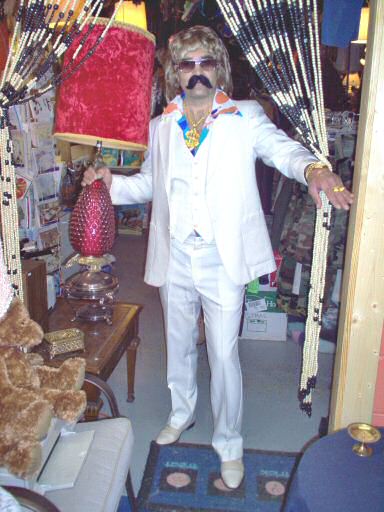
As for the fashion, well - there are no words. Like monks flagellating themselves to atone for their sins, people in the 1970s attempted to make up for their previous economic excesses by forcing themselves to wear horrible, horrible things and listening to disco music. I can't even begin to... what were they... the fat tie... David Bowie!? Make it stop. Please, make it stop.
1980s - early 1990s
The 1980s were sort of a hangover from the 1970s. There were a couple of recessions and government debts rose rapidly. Conservative politicians in the US, UK and Canada implemented neoliberal economic policies, which led to economic pain and social displacement in many areas of the economy.
As my theory predicts, the 80s is known for some pretty questionable fashion taste. We've got the Big Hair, exhibit A, B and OMG. Of course the MC Hammer parachute pants and the hip hop square-cut. I could go on.
But, you want to counter, the 80s was awesome and so was the music!1! Well, you're wrong.
Mid-1990s to present?
Since the rapid economic growth of the mid- to late-1990s, it's my general impression that people have started to dress better again. We've left some of the crazy experiments of the last two and a half decades behind. Granted, the suit & fedora-wearing gentleman has all but disappeared, but I'm noticing that at least pinstripes are making a comeback.
I recognize that this is a huge generalization, and that clearly different groups within society have different tastes. Moreover, this is not to say that we don't have some laughable fashion items of our own these days. My housemate has nominated board shorts with floral patterns. My personal choice is Ugg boots - you want to know who was wearing those boots 20 years ago? That hideous woman from the Shining, that's who. Feel free to add your own in the comments section.
Conclusion
This is, admittedly, not a particularly robust thesis. Nevertheless, I think the idea that fashion reflects the economic zeitgeist is a plausible explanation for the ups and downs in fashion history over the past century or so. As we enter into what many people are labeling "the worst economic crisis since the Great Depression," this is something worth pondering. During the 1930s, President Roosevelt proclaimed that there was nothing to fear but fear itself. But back then, Roosevelt was not yet aware of an even scarier possibility: the return of polyester.
Well that's exactly what I'm going to try to do here. My idea is that people tend to be more stylish during periods of economic boom. It's not an airtight theory, but it's Friday so bear with me. I realize there's a problem from the outset. I'm subjectively biased towards fashion in that I'm more likely to favour current fashion trends over older ones - it's what I'm used to wearing and seeing around me. But I think, even with that in mind, it's not too difficult to look back at history and say: yes, those people looked sharp, or, oh God! something was horribly, horribly wrong. Also, I'm sticking to North-Atlantic economies because I know less-than-nothing about fashion in the rest of the world. So let's start with post-WW1
1920s
The Roaring Twenties - a few minor recessions notwithstanding, economic growth in the twenties was impressive. It was the Jazz age, there was the jitterbug, and of course there was the infamous stock market bubble. Everyone owned stocks. From Wall St. barons down to their limo drivers, stock tips were being shared and discussed in everyday conversation. Everyone was getting rich.
What do we see? For the women: some funny-looking stockings & bathing caps, this is not bad, nor this. A little, er, old fashioned but classy nevertheless. Same goes for the men: the three piece with hat & hankerchief. And of course Al Capone: badass.
1930s
The Great Depression. Clearly some people managed to stay largely unaffected by the extended economic downturn, but with unemployment at 20%+, things tended to be a little more sober. Or worse. Enough said.
1950s - 1960s
Post-war recovery was remarkably rapid, even in Europe. Economic growth, particularly in the 1960s under Kennedy and Johnson, was averaging around 5-6% per year - that's unbelievable by today's standards. This was the era of cheap oil & boat-sized sedans, big industry and safe union jobs. As Patrick at zzzeitgeist pointed out, it was a period of unrestrained consumption.
And man, they looked sharp. The fedora continued to reign supreme. No complaints about the introduction of the mini-skirt, either. Or maybe I've just been watching too much Mad Men.
Of course, I'm forgetting the hippies. But the hippy movement didn't really take off until the late 60s and early 1970s - and by 1968 the economic policies of the previous decade had begun to hit the wall....
1970s
Let's take the period from January 1970 until the end of 1982: that's thirteen years or 156 months. According to economist Timothy Taylor, the US economy spent 49 of those months in recession (re: negative growth). That's almost a third of a decade n' change spent in recession. Yikes.
As for the fashion, well - there are no words. Like monks flagellating themselves to atone for their sins, people in the 1970s attempted to make up for their previous economic excesses by forcing themselves to wear horrible, horrible things and listening to disco music. I can't even begin to... what were they... the fat tie... David Bowie!? Make it stop. Please, make it stop.
1980s - early 1990s
The 1980s were sort of a hangover from the 1970s. There were a couple of recessions and government debts rose rapidly. Conservative politicians in the US, UK and Canada implemented neoliberal economic policies, which led to economic pain and social displacement in many areas of the economy.
As my theory predicts, the 80s is known for some pretty questionable fashion taste. We've got the Big Hair, exhibit A, B and OMG. Of course the MC Hammer parachute pants and the hip hop square-cut. I could go on.
But, you want to counter, the 80s was awesome and so was the music!1! Well, you're wrong.
Mid-1990s to present?
Since the rapid economic growth of the mid- to late-1990s, it's my general impression that people have started to dress better again. We've left some of the crazy experiments of the last two and a half decades behind. Granted, the suit & fedora-wearing gentleman has all but disappeared, but I'm noticing that at least pinstripes are making a comeback.
I recognize that this is a huge generalization, and that clearly different groups within society have different tastes. Moreover, this is not to say that we don't have some laughable fashion items of our own these days. My housemate has nominated board shorts with floral patterns. My personal choice is Ugg boots - you want to know who was wearing those boots 20 years ago? That hideous woman from the Shining, that's who. Feel free to add your own in the comments section.
Conclusion
This is, admittedly, not a particularly robust thesis. Nevertheless, I think the idea that fashion reflects the economic zeitgeist is a plausible explanation for the ups and downs in fashion history over the past century or so. As we enter into what many people are labeling "the worst economic crisis since the Great Depression," this is something worth pondering. During the 1930s, President Roosevelt proclaimed that there was nothing to fear but fear itself. But back then, Roosevelt was not yet aware of an even scarier possibility: the return of polyester.
Subscribe to:
Posts (Atom)


 Posts
Posts