We were dismayed to learn that our comments section had only been available to users with registered Google accounts. That has been changed, so everyone is now free to comment as they see fit.
Apologies.
Saturday, 29 November 2008

Friday, 28 November 2008
Obama wants you LSE grads!
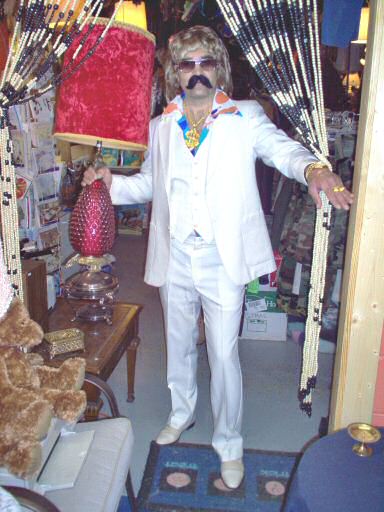
A political economy theory of fashion
Does the health of macroeconomy have an impact on fashion? That's a question I've been wondering about recently. I don't know anything about fashion, but intuitively it seems that there must be some sort of connection between what sort of clothes people wear and the overall health of their economic situation. I mean, wealthy people tend to dress "better" than poorer people - that is to say, their clothing is more aesthetically appealing, judged by the standards of the day. Can we extend that trend to the whole economy and compare between eras?
Well that's exactly what I'm going to try to do here. My idea is that people tend to be more stylish during periods of economic boom. It's not an airtight theory, but it's Friday so bear with me. I realize there's a problem from the outset. I'm subjectively biased towards fashion in that I'm more likely to favour current fashion trends over older ones - it's what I'm used to wearing and seeing around me. But I think, even with that in mind, it's not too difficult to look back at history and say: yes, those people looked sharp, or, oh God! something was horribly, horribly wrong. Also, I'm sticking to North-Atlantic economies because I know less-than-nothing about fashion in the rest of the world. So let's start with post-WW1
1920s
The Roaring Twenties - a few minor recessions notwithstanding, economic growth in the twenties was impressive. It was the Jazz age, there was the jitterbug, and of course there was the infamous stock market bubble. Everyone owned stocks. From Wall St. barons down to their limo drivers, stock tips were being shared and discussed in everyday conversation. Everyone was getting rich.
What do we see? For the women: some funny-looking stockings & bathing caps, this is not bad, nor this. A little, er, old fashioned but classy nevertheless. Same goes for the men: the three piece with hat & hankerchief. And of course Al Capone: badass.
1930s
The Great Depression. Clearly some people managed to stay largely unaffected by the extended economic downturn, but with unemployment at 20%+, things tended to be a little more sober. Or worse. Enough said.
1950s - 1960s
Post-war recovery was remarkably rapid, even in Europe. Economic growth, particularly in the 1960s under Kennedy and Johnson, was averaging around 5-6% per year - that's unbelievable by today's standards. This was the era of cheap oil & boat-sized sedans, big industry and safe union jobs. As Patrick at zzzeitgeist pointed out, it was a period of unrestrained consumption.
And man, they looked sharp. The fedora continued to reign supreme. No complaints about the introduction of the mini-skirt, either. Or maybe I've just been watching too much Mad Men.
Of course, I'm forgetting the hippies. But the hippy movement didn't really take off until the late 60s and early 1970s - and by 1968 the economic policies of the previous decade had begun to hit the wall....
1970s
Let's take the period from January 1970 until the end of 1982: that's thirteen years or 156 months. According to economist Timothy Taylor, the US economy spent 49 of those months in recession (re: negative growth). That's almost a third of a decade n' change spent in recession. Yikes.
As for the fashion, well - there are no words. Like monks flagellating themselves to atone for their sins, people in the 1970s attempted to make up for their previous economic excesses by forcing themselves to wear horrible, horrible things and listening to disco music. I can't even begin to... what were they... the fat tie... David Bowie!? Make it stop. Please, make it stop.
1980s - early 1990s
The 1980s were sort of a hangover from the 1970s. There were a couple of recessions and government debts rose rapidly. Conservative politicians in the US, UK and Canada implemented neoliberal economic policies, which led to economic pain and social displacement in many areas of the economy.
As my theory predicts, the 80s is known for some pretty questionable fashion taste. We've got the Big Hair, exhibit A, B and OMG. Of course the MC Hammer parachute pants and the hip hop square-cut. I could go on.
But, you want to counter, the 80s was awesome and so was the music!1! Well, you're wrong.
Mid-1990s to present?
Since the rapid economic growth of the mid- to late-1990s, it's my general impression that people have started to dress better again. We've left some of the crazy experiments of the last two and a half decades behind. Granted, the suit & fedora-wearing gentleman has all but disappeared, but I'm noticing that at least pinstripes are making a comeback.
I recognize that this is a huge generalization, and that clearly different groups within society have different tastes. Moreover, this is not to say that we don't have some laughable fashion items of our own these days. My housemate has nominated board shorts with floral patterns. My personal choice is Ugg boots - you want to know who was wearing those boots 20 years ago? That hideous woman from the Shining, that's who. Feel free to add your own in the comments section.
Conclusion
This is, admittedly, not a particularly robust thesis. Nevertheless, I think the idea that fashion reflects the economic zeitgeist is a plausible explanation for the ups and downs in fashion history over the past century or so. As we enter into what many people are labeling "the worst economic crisis since the Great Depression," this is something worth pondering. During the 1930s, President Roosevelt proclaimed that there was nothing to fear but fear itself. But back then, Roosevelt was not yet aware of an even scarier possibility: the return of polyester.
Well that's exactly what I'm going to try to do here. My idea is that people tend to be more stylish during periods of economic boom. It's not an airtight theory, but it's Friday so bear with me. I realize there's a problem from the outset. I'm subjectively biased towards fashion in that I'm more likely to favour current fashion trends over older ones - it's what I'm used to wearing and seeing around me. But I think, even with that in mind, it's not too difficult to look back at history and say: yes, those people looked sharp, or, oh God! something was horribly, horribly wrong. Also, I'm sticking to North-Atlantic economies because I know less-than-nothing about fashion in the rest of the world. So let's start with post-WW1
1920s
The Roaring Twenties - a few minor recessions notwithstanding, economic growth in the twenties was impressive. It was the Jazz age, there was the jitterbug, and of course there was the infamous stock market bubble. Everyone owned stocks. From Wall St. barons down to their limo drivers, stock tips were being shared and discussed in everyday conversation. Everyone was getting rich.
What do we see? For the women: some funny-looking stockings & bathing caps, this is not bad, nor this. A little, er, old fashioned but classy nevertheless. Same goes for the men: the three piece with hat & hankerchief. And of course Al Capone: badass.
1930s
The Great Depression. Clearly some people managed to stay largely unaffected by the extended economic downturn, but with unemployment at 20%+, things tended to be a little more sober. Or worse. Enough said.
1950s - 1960s
Post-war recovery was remarkably rapid, even in Europe. Economic growth, particularly in the 1960s under Kennedy and Johnson, was averaging around 5-6% per year - that's unbelievable by today's standards. This was the era of cheap oil & boat-sized sedans, big industry and safe union jobs. As Patrick at zzzeitgeist pointed out, it was a period of unrestrained consumption.
And man, they looked sharp. The fedora continued to reign supreme. No complaints about the introduction of the mini-skirt, either. Or maybe I've just been watching too much Mad Men.
Of course, I'm forgetting the hippies. But the hippy movement didn't really take off until the late 60s and early 1970s - and by 1968 the economic policies of the previous decade had begun to hit the wall....
1970s
Let's take the period from January 1970 until the end of 1982: that's thirteen years or 156 months. According to economist Timothy Taylor, the US economy spent 49 of those months in recession (re: negative growth). That's almost a third of a decade n' change spent in recession. Yikes.
As for the fashion, well - there are no words. Like monks flagellating themselves to atone for their sins, people in the 1970s attempted to make up for their previous economic excesses by forcing themselves to wear horrible, horrible things and listening to disco music. I can't even begin to... what were they... the fat tie... David Bowie!? Make it stop. Please, make it stop.
1980s - early 1990s
The 1980s were sort of a hangover from the 1970s. There were a couple of recessions and government debts rose rapidly. Conservative politicians in the US, UK and Canada implemented neoliberal economic policies, which led to economic pain and social displacement in many areas of the economy.
As my theory predicts, the 80s is known for some pretty questionable fashion taste. We've got the Big Hair, exhibit A, B and OMG. Of course the MC Hammer parachute pants and the hip hop square-cut. I could go on.
But, you want to counter, the 80s was awesome and so was the music!1! Well, you're wrong.
Mid-1990s to present?
Since the rapid economic growth of the mid- to late-1990s, it's my general impression that people have started to dress better again. We've left some of the crazy experiments of the last two and a half decades behind. Granted, the suit & fedora-wearing gentleman has all but disappeared, but I'm noticing that at least pinstripes are making a comeback.
I recognize that this is a huge generalization, and that clearly different groups within society have different tastes. Moreover, this is not to say that we don't have some laughable fashion items of our own these days. My housemate has nominated board shorts with floral patterns. My personal choice is Ugg boots - you want to know who was wearing those boots 20 years ago? That hideous woman from the Shining, that's who. Feel free to add your own in the comments section.
Conclusion
This is, admittedly, not a particularly robust thesis. Nevertheless, I think the idea that fashion reflects the economic zeitgeist is a plausible explanation for the ups and downs in fashion history over the past century or so. As we enter into what many people are labeling "the worst economic crisis since the Great Depression," this is something worth pondering. During the 1930s, President Roosevelt proclaimed that there was nothing to fear but fear itself. But back then, Roosevelt was not yet aware of an even scarier possibility: the return of polyester.
Wednesday, 26 November 2008
Tax Cuts vs. Government Spending: The Lowdown
What's the deal... with fiscal stimulus? That's the burning question that's on everyone's mind these days - yes, everyone. At least it should be, since most members of the G20 have committed to using some sort of fiscal policy measures to compensate for the increasingly futile efforts of central banks to stimulate the economy. Although most people don't care to know the details of this debate, it matters a great deal: somewhere down the line, you're going to get upset with the government for either a) raising your taxes to pay for wasteful spending commitments or b) raising your taxes/cutting benefits to pay for government deficits induced from earlier tax cuts.
This is why it matters whether our respective governments choose to implement direct government spending or issue tax cuts. We've debated this already, but so far the best summary of both sides of the argument that I've come across can be found on Mark Thoma's website. It's a long-ish article, so I'll provide the core points here:
Rather than compare the benefits of tax cuts vs. govt spending on "bang for buck" (govt spending will win because it adds more to GDP), the quoted article suggests that the two approaches should instead be assessed on 1) the value of increased spending (adv: tax cuts), and 2) the precision of timing (adv: govt spending).
Second, although it's true that governments tend to be more wasteful than consumers, Thoma questions whether market actors are really directing their resources towards things of higher value: "Like purchasing stocks and houses in a bubble, things like that?" Equally, we find roads to nowhere built by the private sector: they lead to abandoned housing construction projects.
The big advantage for fiscal stimulus is that it can concentrate spending on large projects that will last well beyond the economic troubles - projects that may not otherwise have been implemented by the private sector due to market failure, lack of economies of scale, or what-have-you. The counter-argument is that, unlike the make-work projects of the New Deal era, building infrastructure requires much more specialization these days. You can't just hire a bunch of people with shovels. That means the spending will have a long lag-effect before it kicks in - perhaps too late.
It seems that for every good argument on one side, there is an equally good counter-argument on the other side. Tax cutters say that fiscal stimulus is just wasted through "leakage" and that it is difficult to turn off the money tap once it's opened. Fiscal spenders counter that tax cuts are also extremely difficult to reverse and that consumers may choose to spend money on goods made outside the country - a form of leakage on its own. So what to make of all this?
It seems that the best solution is to find creative ways to bring elements of both sides together, perhaps taking advantage of the benefits of both. One idea is to reduce value-added taxes on consumer products, but place an expiry date on the reduction to encourage spending now. Another, which Thoma suggests, is merely to break up a stimulus package into pieces, some of which involves targeted tax cuts and others which focus on projects with high social value.
Sounds good to me.
(First image: lmno4p.org; Second: markybaby.com)
This is why it matters whether our respective governments choose to implement direct government spending or issue tax cuts. We've debated this already, but so far the best summary of both sides of the argument that I've come across can be found on Mark Thoma's website. It's a long-ish article, so I'll provide the core points here:
Rather than compare the benefits of tax cuts vs. govt spending on "bang for buck" (govt spending will win because it adds more to GDP), the quoted article suggests that the two approaches should instead be assessed on 1) the value of increased spending (adv: tax cuts), and 2) the precision of timing (adv: govt spending).
Tax Cuts: Gimme a Break
The common argument is that "Unlike the consumer, the government does not reliably spend extra resources on valuable purchases." Examples are not hard to find (cough, Detroit), and politicians are notorious for building roads, bridges and roundabouts to nowhere. In short, there is more overall value in the aggregate decisions of market actors - this is why centrally planned economies fail miserably.
Government spending: Show me the Money
Unfortunately, during times of severe economic uncertainty, consumers are not spending at normal rates and the proceeds from tax cuts are liable to be squirreled away or used to pay down debts. For instance, some members of my office are expecting a lump sum of about $4,000 as a result of some recently-completed union negotiations. Based on my non-rigorous survey of my co-workers, I get the impression that a few are willing to blow it all on a spending spree but most are putting it towards credit cards, etc.Second, although it's true that governments tend to be more wasteful than consumers, Thoma questions whether market actors are really directing their resources towards things of higher value: "Like purchasing stocks and houses in a bubble, things like that?" Equally, we find roads to nowhere built by the private sector: they lead to abandoned housing construction projects.
The big advantage for fiscal stimulus is that it can concentrate spending on large projects that will last well beyond the economic troubles - projects that may not otherwise have been implemented by the private sector due to market failure, lack of economies of scale, or
 what-have-you. The counter-argument is that, unlike the make-work projects of the New Deal era, building infrastructure requires much more specialization these days. You can't just hire a bunch of people with shovels. That means the spending will have a long lag-effect before it kicks in - perhaps too late.
It seems that for every good argument on one side, there is an equally good counter-argument on the other side. Tax cutters say that fiscal stimulus is just wasted through "leakage" and that it is difficult to turn off the money tap once it's opened. Fiscal spenders counter that tax cuts are also extremely difficult to reverse and that consumers may choose to spend money on goods made outside the country - a form of leakage on its own. So what to make of all this?
It seems that the best solution is to find creative ways to bring elements of both sides together, perhaps taking advantage of the benefits of both. One idea is to reduce value-added taxes on consumer products, but place an expiry date on the reduction to encourage spending now. Another, which Thoma suggests, is merely to break up a stimulus package into pieces, some of which involves targeted tax cuts and others which focus on projects with high social value.
Sounds good to me.
(First image: lmno4p.org; Second: markybaby.com)
Monday, 24 November 2008
Deflating Expectations
In August we pointed out that summertime worries over inflation were probably overstated. Since then, a collapse in commodity markets and consumer spending has vindicated this view - so much so that the new worry is deflation. Deflation is by most accounts worse than inflation because of the difficulty in reversing the trend. First, a backgrounder:
Deflation is "A general decline in prices, often caused by a reduction in the supply of money or credit.... Declining prices, if they persist, generally create a vicious spiral of negatives such as falling profits, closing factories, shrinking employment and incomes, and increasing defaults on loans by companies and individuals. To counter deflation, [central banks] can use monetary policy to increase the money supply and deliberately induce rising prices, causing inflation."
The trouble is, central banks have been attempting to increase the money supply by lowering interest rates with less-than-stellar success. Besides, there are inherent limits to monetary policy - limits which seem to be approaching quickly.
So what to do? John Kemp argues forcefully that the best way to deal with deflation is to stop trying to fix it. Que? Based on his reading of previous depressions, deflation is the symptom of a severe decline in the business cycle, not the cause. The full article is very interesting (so is this one), but the conclusion reads as follows:
That means fiscal stimulus! But rather than rely upon the government for everything, Dr. Boli recommends that consumers also do their part (via Megan McArdle):

Deflation is "A general decline in prices, often caused by a reduction in the supply of money or credit.... Declining prices, if they persist, generally create a vicious spiral of negatives such as falling profits, closing factories, shrinking employment and incomes, and increasing defaults on loans by companies and individuals. To counter deflation, [central banks] can use monetary policy to increase the money supply and deliberately induce rising prices, causing inflation."
The trouble is, central banks have been attempting to increase the money supply by lowering interest rates with less-than-stellar success. Besides, there are inherent limits to monetary policy - limits which seem to be approaching quickly.
So what to do? John Kemp argues forcefully that the best way to deal with deflation is to stop trying to fix it. Que? Based on his reading of previous depressions, deflation is the symptom of a severe decline in the business cycle, not the cause. The full article is very interesting (so is this one), but the conclusion reads as follows:
Rather than worrying about a modest decline in the price level, policy needs to focus on guaranteeing households and businesses against the worst aspects of the downturn to minimize the decline in spending and investment. Policies that create demand and jobs, while limiting foreclosures and bankruptcies, rather than fight the deflation chimera or worry about falling asset values are now the urgent priority.
That means fiscal stimulus! But rather than rely upon the government for everything, Dr. Boli recommends that consumers also do their part (via Megan McArdle):
Saturday, 22 November 2008
That Was The Week That Was
While IPE Journal got a makeover...
Politique
-The US National Intelligence Council's 2025 project releases Global Trends 2025: A Transformed World. The report announces the end of the "unipolar moment", and predicts declining American influence and power. While the US will remain the preeminent power, the rise of the BRICs will reintroduce a multipolar world. Other defining trends: increasing competition for scarce resources, greater West-East transfer of wealth, and broader Middle East destabilization.
-World trade is grappling with a tricky little pirate problem, as Saudi joins a NATO anti-piracy fleet and calls for a global response to this "terrorism".
-The IAEA confirms speculation that the Syrian structure bombed by Israel in 2007 contained nuclear material. Syria swiftly calls for end to probe.
-Obama announces plans to create 2.5 million jobs through massive fiscal stimulus, government projects. His cabinet takes shape: Geithner for Treasury, Clinton at State (the Guardian broke her acceptance plans, beating US media to story), and reported negotiations for Gates to remain at Defense.
Economia
-Citi executives huddle in New York with government officials to discuss the bank's survival. The Dow Jones Industrial average closed below 8,000 this week, the first time since March 2003.
-Japan falls into recession, ending longest postwar expansion.
-Pakistan formally requests $7.6bn IMF standby loan, agrees to economic reforms including fiscal deficit reduction.
The Rest
-Scientists now believe that massive glaciers may lie beneath the rocky Martian surface, and humanity is step closer to confirming life beyond Earth.
-Arsenal drop Gallas, ManU lose Berbatov for big Villa clash, and Liverpool/Chelsea stay top of Prem
-Vanity Fair releases its International Best Dressed List. This year's list includes Michelle Obama, Kate Middleton, and Kanye West. West drops a full preview of new album, 808s and Heartbreak.
Politique
-The US National Intelligence Council's 2025 project releases Global Trends 2025: A Transformed World. The report announces the end of the "unipolar moment", and predicts declining American influence and power. While the US will remain the preeminent power, the rise of the BRICs will reintroduce a multipolar world. Other defining trends: increasing competition for scarce resources, greater West-East transfer of wealth, and broader Middle East destabilization.
-World trade is grappling with a tricky little pirate problem, as Saudi joins a NATO anti-piracy fleet and calls for a global response to this "terrorism".
-The IAEA confirms speculation that the Syrian structure bombed by Israel in 2007 contained nuclear material. Syria swiftly calls for end to probe.
-Obama announces plans to create 2.5 million jobs through massive fiscal stimulus, government projects. His cabinet takes shape: Geithner for Treasury, Clinton at State (the Guardian broke her acceptance plans, beating US media to story), and reported negotiations for Gates to remain at Defense.
Economia
-Citi executives huddle in New York with government officials to discuss the bank's survival. The Dow Jones Industrial average closed below 8,000 this week, the first time since March 2003.
-Japan falls into recession, ending longest postwar expansion.
-Pakistan formally requests $7.6bn IMF standby loan, agrees to economic reforms including fiscal deficit reduction.
The Rest
-Scientists now believe that massive glaciers may lie beneath the rocky Martian surface, and humanity is step closer to confirming life beyond Earth.
-Arsenal drop Gallas, ManU lose Berbatov for big Villa clash, and Liverpool/Chelsea stay top of Prem
-Vanity Fair releases its International Best Dressed List. This year's list includes Michelle Obama, Kate Middleton, and Kanye West. West drops a full preview of new album, 808s and Heartbreak.
Friday, 21 November 2008
Friday Fare: Arsenal and Bond
Since its Friday, some light fare to take your mind off the fall of Rome:
The current Bond series, much like Batman, is an interesting reflection of our times. The 1990's (ahhh the 90s) gave us Pierce Brosnan, a solid Bond character, but kind of fluffy and flashy. Sean Connery had the charm and slick image, but there was a gritty ruthlessness to Connery's Bond that lay just under the cool exterior. Brosnan lacked this. Some Bond purists believe that Craig's version is too rough. I disagree, and believe that Craig is more in the tradition of Connery than Brosnan ever was. Importantly, the new Bond films substitute flash for substance. It forces you to question the actions and intentions of 007. He may be working towards an ultimate good, but has he corrupted himself along the way?
We in the West live in a darker, more confusing time. In our heroes we find both hope and despair. Bond is a perfect reflection of this shift.
-Arsene Wenger, obviously having read IPE Journal last night, has reportedly stripped William Gallas of his captaincy. Furthermore, Gallas will not travel with the club to Manchester City this weekend. There is intense speculation over who will take up the arm band, with Gael Clichy, Kolo Toure and Manuel Almunia the frontrunners. Some believe that when Cesc Fabregas returns from suspension next week, he could assume the captaincy for the remainder of the season.
This is an extremely positive (and necessary) move by Wenger, and will hopefully provide the jolt Arsenal needs to make a strong second-half/European run. My vote goes to Fab, the club's talisman and future.
The current Bond series, much like Batman, is an interesting reflection of our times. The 1990's (ahhh the 90s) gave us Pierce Brosnan, a solid Bond character, but kind of fluffy and flashy. Sean Connery had the charm and slick image, but there was a gritty ruthlessness to Connery's Bond that lay just under the cool exterior. Brosnan lacked this. Some Bond purists believe that Craig's version is too rough. I disagree, and believe that Craig is more in the tradition of Connery than Brosnan ever was. Importantly, the new Bond films substitute flash for substance. It forces you to question the actions and intentions of 007. He may be working towards an ultimate good, but has he corrupted himself along the way?
We in the West live in a darker, more confusing time. In our heroes we find both hope and despair. Bond is a perfect reflection of this shift.
State vs. Market
Arnold Kling presents a brief history of state-finance relations. Whereas modern economics assumes a market economy and explains the use of money as a tool to make it work better, Kling argues that, in his "skewed view" of financial institutions, the use of money developed well before the market:
Skewed? I thought that this was mainstream. The emergence of "the market" as a distinct entity is extremely recent in terms of human history. If you had asked a peasant in 16th century about the market, he/she would have pointed you towards the stalls selling produce in the town square. The whole concept of shifting power from the state to market forces would have been nonsensical.
This is why, prior to Adam Smith and his contemporaries, economics (or political economy, as it was then known) did not exist as a field of study. How could it? Every aspect of what we would now label economic activity was deeply intertwined with social, political and power relationships.
Of course, it still is. Marx and his followers represent one version of this story, but there are many variations to choose from. Oxford and Cambridge still offer courses in PPE (Politics, Philosophy and Economics) because they recognize the necessary overlap. This makes the attempt by modern academia to separate political studies from their economic counterparts all the more frustrating.
Not only are the Wall St./Main St. dichotomies annoying, they're misleading. If anything, the recent financial turmoil has reminded everyone of the importance of treating "the state" and "the market" as complementary, not adversarial, components of our social structure. And in case there was any doubt: Rory and I started the IPE Journal to explore this relationship and try to make some sense out of it all.
How are we doing so far?
According to the skewed view, there was never a state of nature in which financial institutions roamed free in the wild, to be later tamed by regulators. Instead, financial institutions were fundamentally institutions of government. Entrepreneurial finance is a modern development, and its separation from government may always be tentative.
Skewed? I thought that this was mainstream. The emergence of "the market" as a distinct entity is extremely recent in terms of human history. If you had asked a peasant in 16th century about the market, he/she would have pointed you towards the stalls selling produce in the town square. The whole concept of shifting power from the state to market forces would have been nonsensical.
This is why, prior to Adam Smith and his contemporaries, economics (or political economy, as it was then known) did not exist as a field of study. How could it? Every aspect of what we would now label economic activity was deeply intertwined with social, political and power relationships.
Of course, it still is. Marx and his followers represent one version of this story, but there are many variations to choose from. Oxford and Cambridge still offer courses in PPE (Politics, Philosophy and Economics) because they recognize the necessary overlap. This makes the attempt by modern academia to separate political studies from their economic counterparts all the more frustrating.
Not only are the Wall St./Main St. dichotomies annoying, they're misleading. If anything, the recent financial turmoil has reminded everyone of the importance of treating "the state" and "the market" as complementary, not adversarial, components of our social structure. And in case there was any doubt: Rory and I started the IPE Journal to explore this relationship and try to make some sense out of it all.
How are we doing so far?

Thursday, 20 November 2008
Arsenal in crisis
 Despite my futile job search, a global financial crisis, and the lingering feeling that maybe the whole "grad school in London" adventure was poorly timed, I have a much bigger worry on my mind: Arsenal.
The Gunners are in crisis, and for the first time in the Arsene Wenger era are at serious risk of falling out of European contention. The club has been shook in the past week by a 2-0 home defeat to Aston Villa (granted, a very good club), the loss of young lion Theo Walcott to shoulder surgery, and the public revelations today from Captain William Gallas. Gallas came out firing to the press, seeking to deflect the blame that has been placed at his feet for the club's poor performance since that horrific day at Birmingham last season (warning- graphic images). The Frenchman aired the young club's internal strife and immaturity, and signaled out one player in particular for undermining the team (referred to as "six years younger than I am"- which many are speculating refers to Robin Van Persie).
Prem followers and Gooners alike will undoubtedly find the captain's comments loathsome, considering his dreadful stewardship since receiving the arm band (breakdown at Birmingham, inconsistent play at best, and the picture last month of him leaving a night club with cigarette in tow- i know a cig seems trivial, but when you've admitted to poor form, it doesn't help your cause). Despite a number of critical goals, Gallas has proven himself entirely unworthy of following Henry. And for a club whose old motto, Victoria Concordia Crescit, means "victory through harmony", such an airing of lockeroom troubles tarnishes the club both on field and off.
But Arsenal' problems run much deeper than Gallas. Wenger's great experiment has produced arguably the most aesthetically pleasing club football since 1970's Ajax. But it has relied too much on youth, shunned the transfer market, and lacked the toughness needed to win the Prem. While criticism of Wenger is near blasphemous to Gooners, many are starting to question his stubborn vision, especially his decision not to sign a replacement for Matheiu Flamini this summer (the Flamini-Fabregas partnership last season was among the best midfield tandems in the world). While Cesc Fabregas will, in my opinion, exceed his already brilliant career to become the best footballer in the world, the 21 year old's maturity and aggressiveness are still an issue. He also seems to have lost the killer instinct he showed last season (only 1 goal through 16 total appearances v. 11 at same point last year), and despite Samir Nasri and Walcott's tremendous potential (and really solid play by Nasri this season), the midfield is still (literally) lightweight. Add to this a down right terrible defense at times, and the club has struggled to equal the brilliant form it showed last fall.
All this adds up to a continuation of the inconsistency we've seen out of Arsenal in recent years. Win the big ones, lose the gimme games. With Eduardo and Tomas Rosicky returning soon, there is hope that the Gunners can make a big push in Europe. But their Prem challenge is done, leaving Arsenal without a league title for the fifth straight season. The club needs big changes, starting with the arm band.
Countries For Sale: A Capital Solution for Stubborn Problems
The Economist has a fanciful, tongue-in-cheek editorial on the possibility of solving some of the world's troubling dilemmas by purchasing bits of other countries. Spurned on by the recent proposal by the Maldivian president to buy a new homeland for his drowning nation - rising sea levels threaten the tiny island nation with extinction - the Economist suggests using this approach elsewhere:
When I was a teenager, I naively toyed with the idea of a land-swap to address some sticky international issues (the citizens of N. Ireland might actually enjoy the weather along the West Bank, after all), but the market solution seems a better approach.
The Israelis, for instance, could put an end to a hundred years of futile hostilities by buying somewhere for the Palestinians. If they clubbed together, they could get somewhere really nice—Florida, maybe. China could stop making aggressive gestures towards Taiwan and buy Malaysia instead. It’s already run by
Chinese, so they’d hardly notice the difference.
When I was a teenager, I naively toyed with the idea of a land-swap to address some sticky international issues (the citizens of N. Ireland might actually enjoy the weather along the West Bank, after all), but the market solution seems a better approach.
Subscribe to:
Posts (Atom)


 Posts